Many business owners believe digital marketing is a complex, modern enigma that requires a complete departure from traditional business sense. However, Harish Vasudevan, in a conversation with Jasravee Kaur Chandra , suggests that we have been blinded by the “flash” of new technology. To succeed today, you must strip away the frills and understand that digital is simply “direct marketing on steroids”.
Is Your Marketing Strategy Just a Fancy New Toy?
We often get distracted by the latest “miracle” tools. Harish notes that just a few months ago, everyone claimed the greatest job in the world was prompt engineering, yet that conversation vanished almost instantly. The reality is that the core of marketing has not changed since the 1960s. Whether you are a physiotherapist or a dog walker, the fundamental AIDA model (awareness, interest, desire, and action) remains the foundation of every sale.
The promise of digital was always about the “Holy Grail” of marketing: the ability to speak to two different people, even twins, according to their unique motivations and desires. Ranjan Kapur, the former head of Ogilvy, wisely noted that digital allows you to do one-on-one communication at a fraction of the cost and with incredible speed. If your current strategy does not take you closer to your business goals, it is just a “pointless tool”.
Stop Harassing Your Customers at the Bar
One of the biggest mistakes brands make is demanding data without offering anything in return. Harish uses a provocative analogy to explain the concept of gated content.
“Gated content is sort of trying to get the phone number of this pretty girl you meet at a bar, and she’s not just going to give you the number without her getting something in exchange.”
This exchange of value is critical. You cannot expect a lead to hand over their contact information if you have not established trust or provided a solution to their problem. You must first “fish where the fish are”. This means being present where your customers are already searching for solutions, rather than waiting for them to find your website.
The 10-Minute Assassin of Your Brand Loyalty
Quick commerce is currently “hammering away at brands and brand loyalty”. In a world of ten-minute deliveries, the “immediacy of it trumps everything else”. When people need an item right now, they often put the reliability of a known brand out of their minds and prioritise speed of delivery.
- The Induction Stove Crisis: During a perceived gas shortage, consumers scrambled to buy induction stoves. While they might have preferred a reliable brand like Philips or Prestige, they would ultimately buy whatever brand was available for immediate delivery.
- The Commodity Trap: In many categories, such as white goods or basic groceries, the brand is becoming irrelevant as long as the product works.
- Corroding Behaviour: Quick commerce is fundamentally changing how we decide, replacing weekly grocery lists with impulsive, single-item orders like a bag of salt or a carton of dahi.
Why You Should Trust a Roach More Than Facebook
Social media is often compared to an exciting party where everyone is dressed up and talking. Email marketing, by contrast, is described as being as “dull” as writing an essay to yourself. However, Harish points out that email has proven itself to be the “roach” of the marketing world because it survives everything.
- The One-on-One Advantage: Email is a direct, personal communication channel. While social media requires the user to go out looking for content, an email or a WhatsApp message lands directly in their personal space.
- The Database is Gold: Data is the “oil” or “gold” of the modern world. Without a database of email addresses, you cannot maintain the one-on-one relationships that drive long-term business
- The Social Trap: Marketers often over-focus on social media because of the “buzz,” but social media should primarily be used to cast a wide net to eventually bring people into a private, one-on-one relationship.
Are You Driving Your Business into a Lake?
The modern marketer is swamped with data, but Harish warns against following metrics blindly. He compares the misuse of data to following Google Maps into a body of water.
“If you take data and just follow it blindly, then you’re not really using your instinct and your knowledge on what is it where you’re trying to go.”
To avoid this, you must never look at data until you know exactly what answer you are seeking. If you pull out all the data at once, you will get lost in the noise. For example, if 70,000 people visit your website, but only 5,000 spend more than ten minutes there, you should only care about those 5,000 people. You must ask specific questions: who are they, and where did they come from?
The Oscar Speech Lie and the Plumber’s Bill
Last-click attribution is a “dangerous phenomenon” because it ignores the actual journey a consumer takes. Harish illustrates this with two powerful analogies.
- The Oscar Analogy: An actor might win an Oscar for a specific movie, but they only won it because of all the work and all the movies they did before that moment.
- The Plumber Analogy: A plumber might charge five thousand dollars for a job that took thirty seconds. The customer might complain, but the plumber is charging for the twenty years of knowledge that allowed him to know exactly where to hit the pipe to fix it.
If you only look at the “last click,” you are ignoring the awareness and interest stages that made that click possible. Digital marketing actually enables you to track back and understand every step a person took before they purchased, allowing you to replicate the journeys that actually convert.
Survival in the AI Black Box
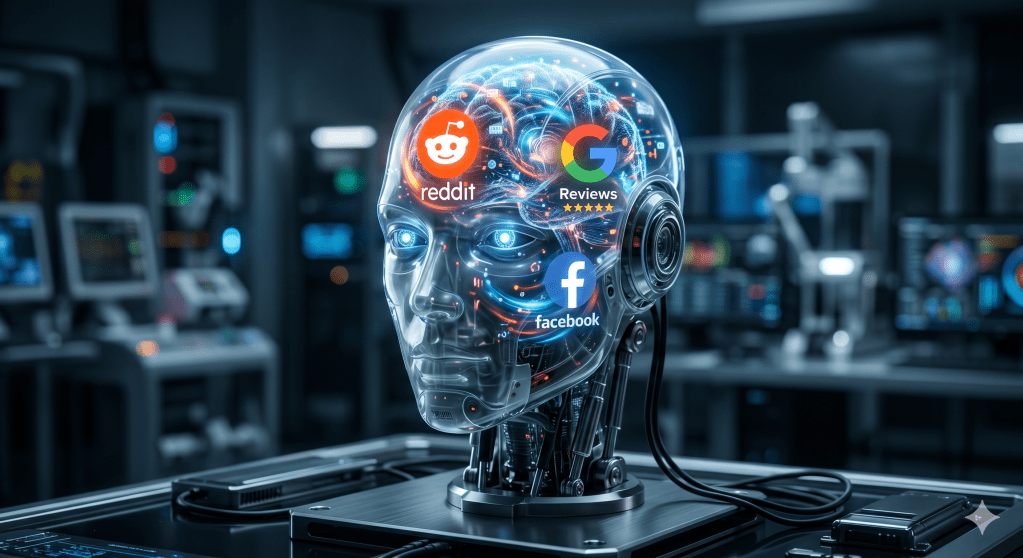
Today, we are dealing with multiple “black boxes” from Google, OpenAI, Claude, and others. AI is now taking social cues by looking at platforms like Reddit and Google reviews to decide if your brand is credible.
“Basically, AI is now taking social cues; they’re looking at Reddit platforms, Google reviews, whatever reviews, and that plays a factor. So it goes back to what are other people saying about you, about your brand.”
In this environment, customer satisfaction and positive feedback are more important than ever. If enough people give positive feedback about your service, you are likely to rise to the top of the AI rankings. It is no longer enough to just do a good job; you need other people to publicly say you have done a good job.
Ultimately, whether you are using AI, quick commerce, or email, the goal is to match the consumer with their need through a deliberate and well-understood journey. By simplifying your approach and focusing on credibility and one-on-one relationships, you can navigate the “potholes and road bumps” of the digital world and find a path that actually takes your business forward.


Leave a Reply