Article by Jasravee Kaur Chandra
“Oh, it will be a stretch. I just have enough energy to go through a day.”
That’s what I told myself, without drama, just quietly noting the exhaustion. When the doctor said I had no iron reserves in my body, none. It struck a deeper chord. The haemoglobin was low, yes, but more problematic was the lack of reserves. Nothing to draw from. That started me thinking.
Have I ever built a reserve I could fall back on when things ran dry?
Not just health-wise, but emotionally, mentally, spiritually? Have I stored up good things, good deeds, acts of kindness? These are what one will always need to rely on, and they tend to fluctuate in supply.
There was a time when storing came naturally to us. We had a storeroom in our Kanpur home. It held large trunks of winter clothes and stacked sections of forgotten things. I remember hiding there during games of hide-and-seek, both afraid and mesmerised. That dark room held not just objects but stories. Some had already been told, others were still waiting to be imagined. There was something sacred about that storage. It carried a sense that we were preserving something for later. A future we couldn’t yet name, but one we knew would come.
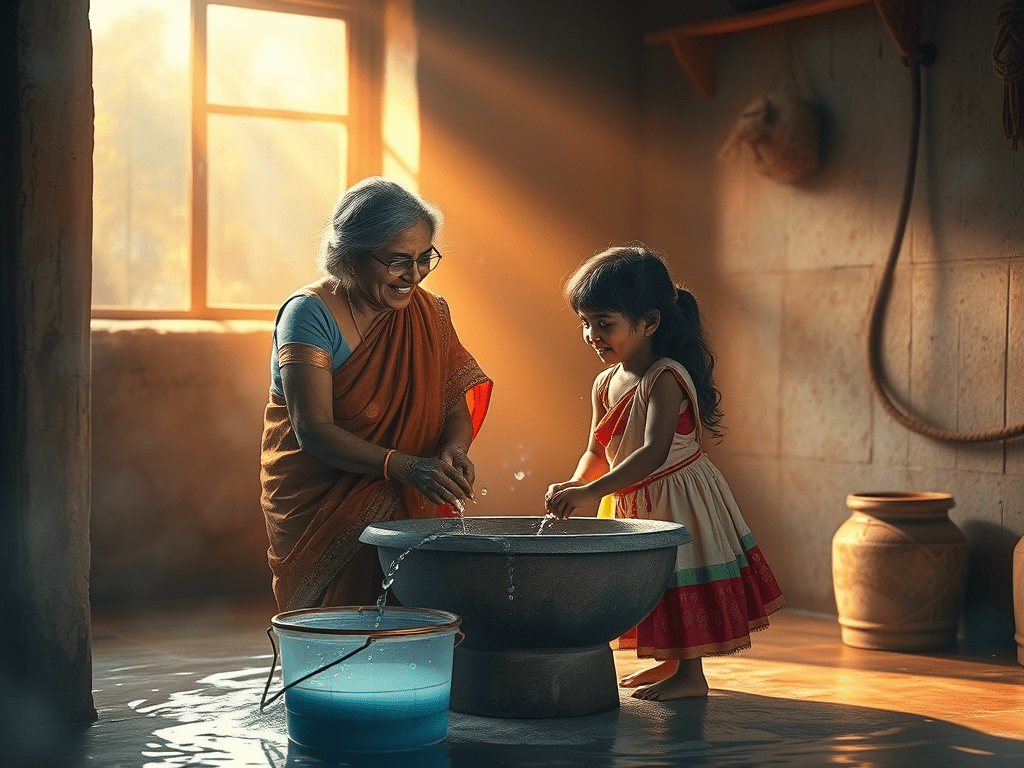
Another memory rises: being at the farms with Nani ji, where water was in short supply. She gave us half a bucket for this chore, half for that. A separate container held water for the flush, recycled from utensils just washed. My brother and I adapted to it beautifully. We never complained. The logic of it made sense: the supply is limited, so you use it judiciously. No lectures were needed. Just the rhythm of scarcity shaping sensibility.
But now, it feels like the rhythm has been lost.
Energy, time, natural resources, nutrition. There seems to be a deficiency in everything that is good and desired. And yet, we want to use up everything that’s available. Tap open. On-demand. Constant supply. Instant delivery. Instant gratification—as if there is no “later.” We dispose of what we don’t need right now, telling ourselves we can always buy again. Replace. Refresh. Reorder.
We’ve confused the abundance mindset with the illusion of abundance.
The pressure to consume and gratify now is relentless. Creating enduring value, having a long-term view, is considered passé. Outdated. Idealistic.
The word “reserve” itself comes from the Latin reservare. It means to keep back, to save up, to preserve. There’s something beautiful about that. To protect by holding something in. To retain, not out of fear, but out of care.
Over time, the word has meant everything from self-restraint to stored-up resources, even troops held back in times of war. Somewhere along the way, we’ve let it slip into obscurity.
But when did building a reserve become old-fashioned?
The higher voices, whether religious, spiritual, or ancestral, have always encouraged us to think beyond just a single lifetime. To be watchful of every action. To use only as much as we need. To create enough not just for the self but for others. To build for the future. A future that includes more than just “me.”
But now, there’s no storeroom. No half-bucket mindset. No silence in which to listen to what’s enough.
Even the things we take most for granted; youth, energy, a day; come in limited, precise amounts. Yes, life is cyclical, but we all know: after a certain age, we will die. We ourselves are in short supply. The shortness may be relative, but it is real.
A husband’s generosity. A mother’s patience. One’s own tolerance. Even those have limits.
There’s a quiet merit to using everything mindfully.
To taking only as much as one needs.
To choosing desires cautiously.
To cultivating ones that truly matter.
To watching and being vigilant of one’s own attention.
We live in a world of fast-burn and fast-turn. But perhaps, building reserves of grace, energy, ideas, care, and compassion is the quietest form of rebellion. The most radical kind of hope.
What are you building for the future?
 Jagged with Jasravee, the Marketing Show
Leave a comment